

Cas d'usages
Ces villes, régions et organisations utilisent déjà Decidim
Case studies
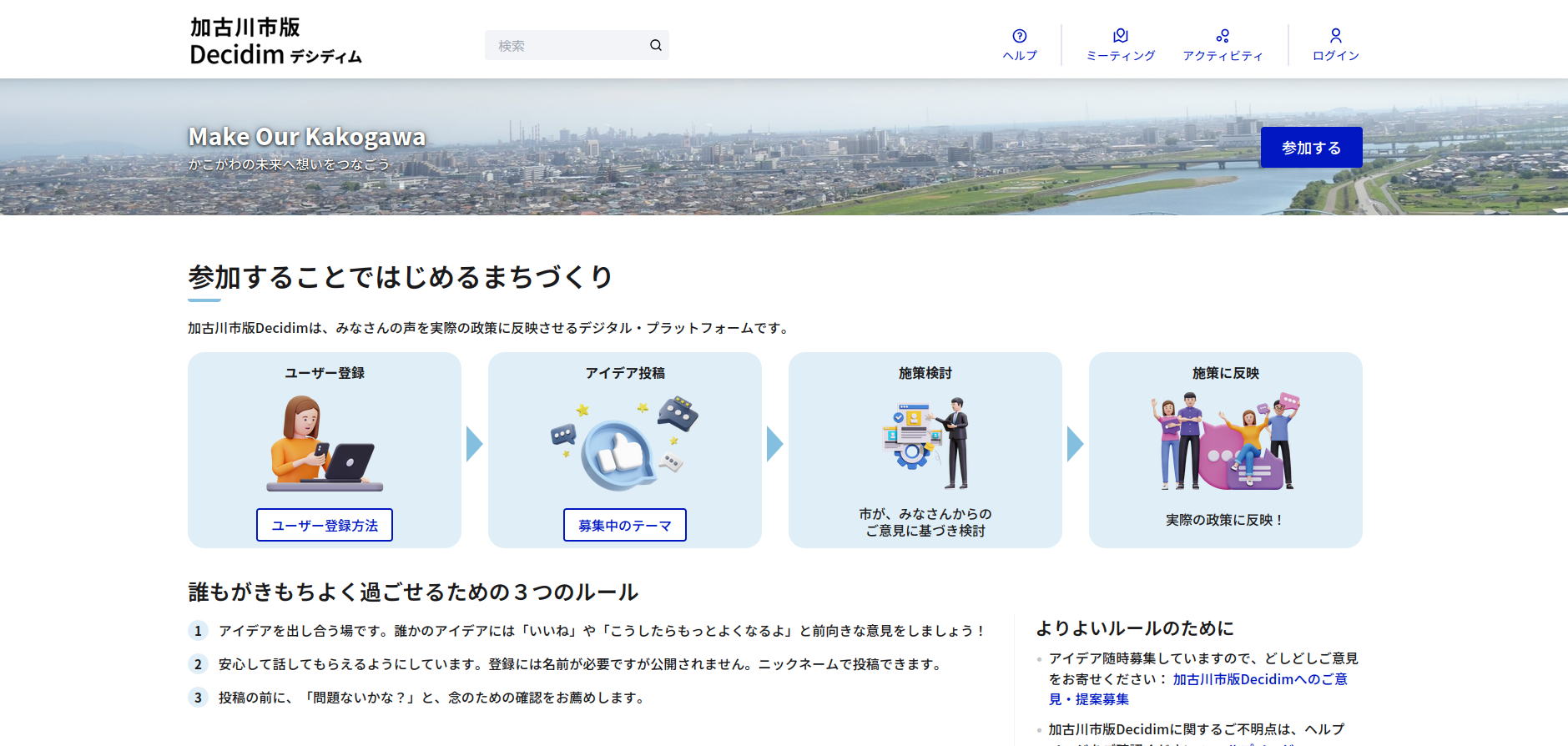
The Japanese Case
The first Decidim instance in the Pacific island was deployed on the year 2020 at Kakogawa, later came Yosano, Nishiaizu, Kamaishi and the community instance Meta.
Read the case study
Participatory Budgets 2020-2023 in Barcelona
The first participatory budgets in the city, or how to promote democratic transparency and citizen empowerment
Read the case study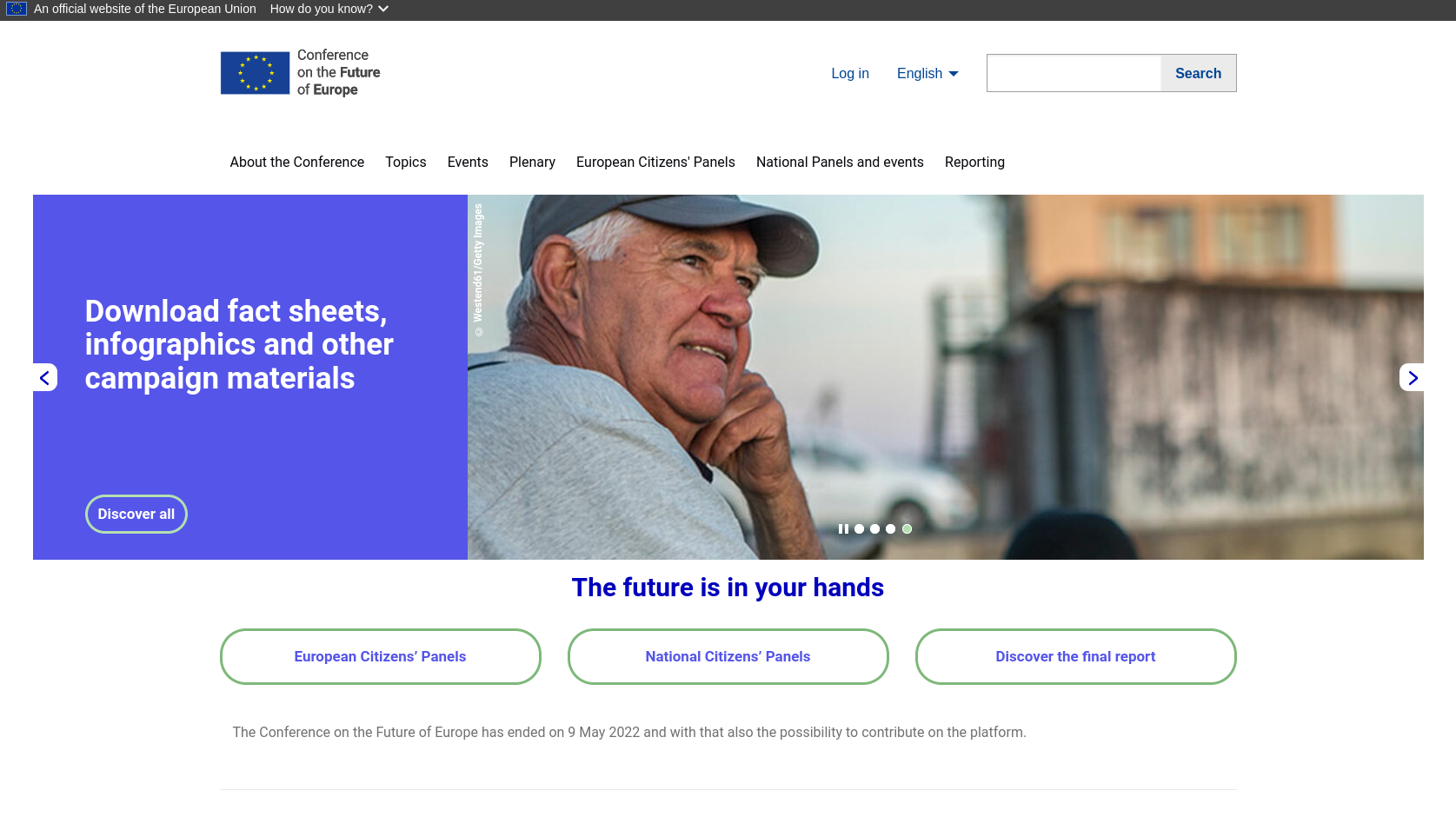
The Conference on the Future of Europe, UE
The European Commission used Decidim to implement the multilingual digital platform of the Conference on the Future of Europe
Read the case studyFaits & Chiffres
Decidim ne cesse de croître et d'être adopté par des organisations et la communauté.
511
Instances
33
Countries
318
Institutions
182
Organizations
925.152
Participants
427
Processes
100.129
Propositions
120.554
Commentaires
11.215
Rencontres
They've already used Decidim
More than 450 organisations and institutions have proudly used Decidim.




Testimonials
 Francisco Tena
Pipeline to Power, travaillant pour la Commission d'Engagement civique de la ville de New York
Francisco Tena
Pipeline to Power, travaillant pour la Commission d'Engagement civique de la ville de New York
"Part of what makes Decidim so powerful is that it adds a level of abstraction to the work separating out the steps of a process and the activities associated with the process. That’s part of the information architecture, so that not only you are saying what is happening at each step but different parts of Decidim behave differently depending on when you are doing or depending on what step in the process you are in. The fact that that’s customizable really allows Decidim to be moulded to how we are doing our work and not our work to be moulded."
 Sivan Pätsch
Directeur de la recherche OpenForum Europe, Union européenne
Sivan Pätsch
Directeur de la recherche OpenForum Europe, Union européenne
"The process started in October 2019 at the European Commission’s DG Communication and eDemocracy unit at the Joint Research Centre, the European Commission’s science and knowledge service. An analysis of the needs of the Conference and which tools fit those, lead to choosing the open source tool Decidim for its technical maturity, broad community and adaptability."
 Kasia Odrozek
Fondation Mozilla
Kasia Odrozek
Fondation Mozilla
"We suffer under a lack of public space. Its particularly important that we reclaim these public spaces for us. Open platforms such as Decidim do exactly that. Is not only that is open source so other people can fork it, reuse it and build a process. It also has these values that we want to reflect in our society encoded in the way it’s designed."
Francisco Tena
Pipeline to Power, travaillant pour la Commission d'Engagement civique de la ville de New York
"Part of what makes Decidim so powerful is that it adds a level of abstraction to the work separating out the steps of a process and the activities associated with the process. That’s part of the information architecture, so that not only you are saying what is happening at each step but different parts of Decidim behave differently depending on when you are doing or depending on what step in the process you are in. The fact that that’s customizable really allows Decidim to be moulded to how we are doing our work and not our work to be moulded."
Sivan Pätsch
Directeur de la recherche OpenForum Europe, Union européenne
"The process started in October 2019 at the European Commission’s DG Communication and eDemocracy unit at the Joint Research Centre, the European Commission’s science and knowledge service. An analysis of the needs of the Conference and which tools fit those, lead to choosing the open source tool Decidim for its technical maturity, broad community and adaptability."
Kasia Odrozek
Fondation Mozilla
"We suffer under a lack of public space. Its particularly important that we reclaim these public spaces for us. Open platforms such as Decidim do exactly that. Is not only that is open source so other people can fork it, reuse it and build a process. It also has these values that we want to reflect in our society encoded in the way it’s designed."